
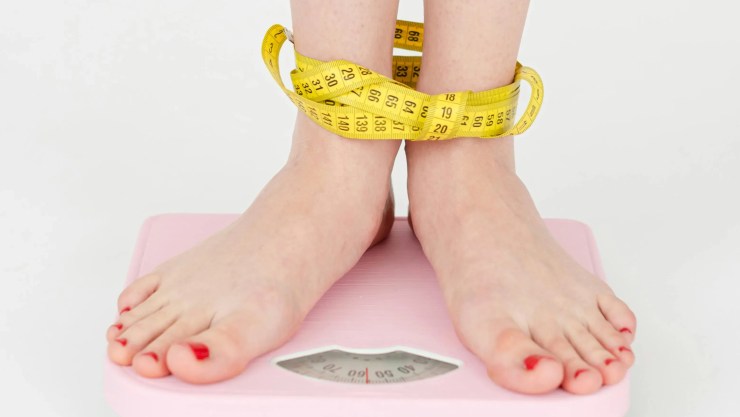
If the number on the scale sets the tone for how you feel the rest of the day, if you celebrate when it goes down, criticize yourself when it goes up, and allow that one measurement to define how healthy, or even worthy you believe you are, read on. Health is about far more than what that number is telling you and if health is your goal you may be approaching it from the wrong angle. If so, it’s not your fault.
While weight can sometimes provide useful information, it is only one small piece of a much larger picture. True wellness includes energy levels, sleep quality, mood, strength, mobility, digestion, stress management, and overall quality of life. Focusing only on pounds gained or lost can cause us to overlook the root cause of weight (which is a symptom of other factors) and miss the mark on meaningful changes happening beneath the surface.
If you’ve ever gone through a period of consistently eating nourishing foods and moving your body regularly, you may have noticed that you sleep better, think more clearly, and feel more energized, even if the scale barely changes. Those are important victories. In many cases, they are even more significant than weight loss itself. These same changes go unnoticed when we are laser focused on a number, or belly fat, or the body we had 10, 20, or 30 years ago. We have been conditioned through the media and the diet culture to think that thin is better and that if we “fail” it is our fault.
This certainly does not mean all goals related to weight are wrong. For some individuals, losing weight may improve mobility, lower disease risk, or help them feel more comfortable in their bodies. But when the scale becomes the only measure of success, it can create frustration and discourage healthy behaviors that are already making a positive impact.
Our bodies are incredibly complex. Hydration levels, hormones, medications, stress, sodium intake, muscle gain, and even lack of sleep can all affect the number on the scale from day to day. That fluctuation does not necessarily reflect fat gain or loss. Yet many people allow a perfectly normal change of two or three pounds to derail their motivation. Motivation in and of itself is not a strategy. When we practice shifting our focus from weight to health, the rest falls into place. It involves unlearning what we’ve been conditioned to believe, not all at once but by chipping away and making 1% changes over time. Our thoughts and our beliefs dictate our actions.
Our bodies seem to be tolerant of our behaviors, especially when we’re young, but the cumulative effect of our choices show up years later. Here is an overly simplified example: If we choose a muffin for breakfast today (which is basically cake for breakfast) the harm won’t be obvious tomorrow but make that the norm and we may be prescribed a medication years down the road that comes with a host of “potential” side effects. The doctor may have been telling us for years to lay off the daily muffins but we didn’t heed the warning. We may even be relieved that we now have medication that will allow us to keep eating the muffins! Sadly, the belief that a prescription is a free pass to continue with poor lifestyle choices is a common misconception.
Then there are those who seem to “get away with” consistently making poor nutrition and lifestyle choices. No matter what, they don’t gain an ounce. We may envy their metabolism and wish we could be that way too. Unfortunately, this group may be less aware of the long term damage their choices are making until someday it shows up in the way of symptoms or bloodwork. And, because that person is thin, they are often perceived as “healthy” by their peers who are shocked when they get sick. Such thinking is clearly misaligned with the truth. There is no armour or guarantee that will make us 100% disease proof, but when our choices are on point most of the time, we will likely feel our best most days and our bodies will be better equipped to go to bat for us if and when something happens. There is something to be said for feeling your best most days and recognizing what that actually feels like.
Your scale can’t tell you that you no longer feel exhausted by mid-afternoon and it certainly cannot measure confidence, joy, or self-respect. These are things you will notice when you allow the shift in perception. This becomes especially important because many people begin healthy lifestyle changes with punishment in mind instead of self-care. Exercise becomes something to dread rather than a way to strengthen the body. Meals become centered around restriction instead of nourishment.
Wellness shouldn’t be a battle, it is a caring partnership with ourselves. Some weeks you may lose pounds. Other weeks you may gain strength, confidence, healthier habits, or a better relationship with food. All of those things create the foundation for long-term well-being.
So, should you decide to step on the scale, remember: that number could be telling you part of the story but it will never tell you the whole story.


